
Over the last few years, I’ve helped businesses that were stuck on page 2 or buried under competitors even though they had “done SEO.” Most of them wanted a simple answer to one question: how to rank higher on Google without guessing every month.
In this checklist, I’ll walk you through how I think about ranking higher on Google in 2026: from intent and content clusters to technical fixes, authority, and AI‑friendly structure. Whether you’re a small business owner, a marketer managing a company website, or a blogger looking to grow organic traffic, these steps apply. I’ll keep it practical, show data where it matters, and focus on steps you can actually implement today.
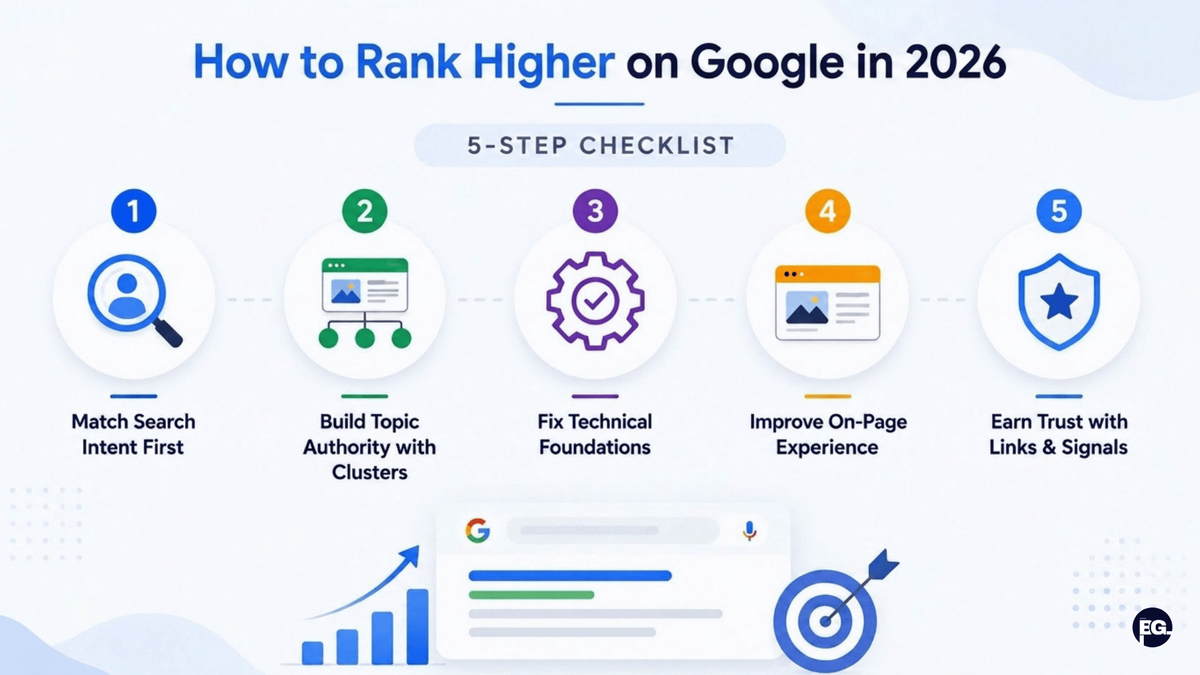
If you want the short version, here’s the 5‑step checklist I use when I want a page to rank higher on Google this year:
BrainGig note: A solid “rank higher on Google” plan is not one trick, it’s a system that combines helpful content, clean tech, and authority so Google and AI tools can confidently choose you as the answer.
| Step | What it means in real life | Simple action to take |
|---|---|---|
| 1. Nail search intent | Each page solves one clear user problem | Map 1 primary intent per page (informational, commercial, transactional, local) |
| 2. Build topic clusters | Related content supports one main topic | Create 1 pillar page + 4-6 supporting articles, link them together |
| 3. Fix technical foundations | Site is fast, mobile‑friendly, and easy to crawl | Check core web vitals, fix broken links, clean up indexing and sitemaps |
| 4. Optimize on‑page & UX | Pages are clear, readable, and internally linked | Improve titles, headings, internal links, FAQs, and layout for humans and AI |
| 5. Strengthen authority and trust | Other sites and users confirm you’re a good answer | Earn relevant backlinks, reviews, mentions, and keep brand signals consistent |
| 6. Track and improve continuously | You know what actually helps you rank higher on Google | Use Search Console, analytics, and CTR data to refine pages and topics regularly |
When I audit sites that want to rank higher on Google, the first issue I see is a mismatch between the query and what’s on the page. The content is “about” the keyword, but it does not really answer what the user wanted when they typed it.
Modern ranking guides are very clear about this: Google now ranks answers, not just pages. LocalMighty’s 2026 guide, Ueni’s “rank higher on Google and AI assistants” article, and mainstream resources like WordStream all start with the same rule, understand the search intent and build the page around that.
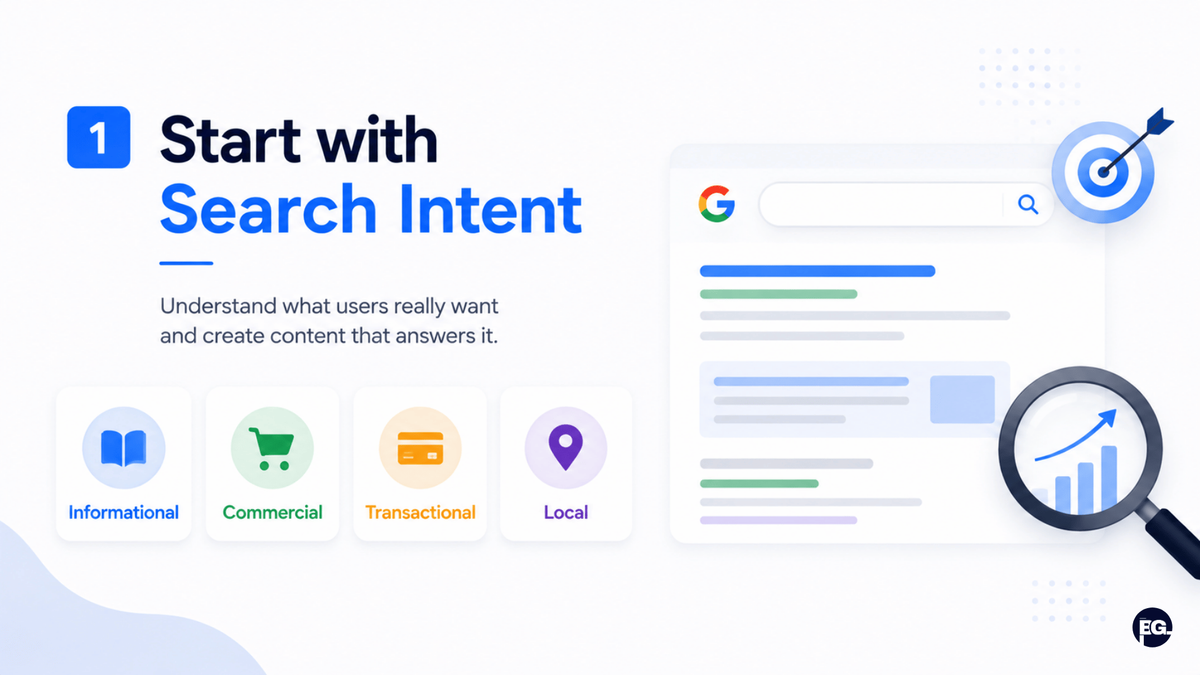
Most checklists break intent down into four main types:
If you want to rank higher on Google for a specific phrase, start by asking: what is this person really trying to do? A good page should feel like a direct, honest answer to that, not like a keyword checklist.
In the old days, some people tried to rank higher on Google by writing dozens of short posts targeting slightly different keyword variations. In 2026, most serious guides now say the same thing: this dilutes your topical authority instead of helping it.
More recent “rank higher on Google” playbooks talk about topical authority, how clearly and deeply you cover a topic across your site. Moz’s 25‑step ranking checklist and LocalMighty’s 2026 guide both highlight the power of pillar pages supported by clusters of related content, all interlinked in a logical way.
Let’s say you want to rank higher on Google for “local SEO for restaurants.” Instead of writing one generic post, you might create:
Each supporting piece links back to the main guide and to each other where relevant. Over time, Google sees your site as a stronger resource around that topic, which helps you rank higher on Google for more related searches, not just the exact keyword. One honest word of caution though: building a proper topic cluster takes time and resources. If you’re a small business or solo blogger with limited bandwidth, start with one small cluster (3–5 related articles) before trying to map out an entire content hub. Done well, it’s worth it. Done in a rush, thin cluster pages can actually dilute your topical authority instead of building it.
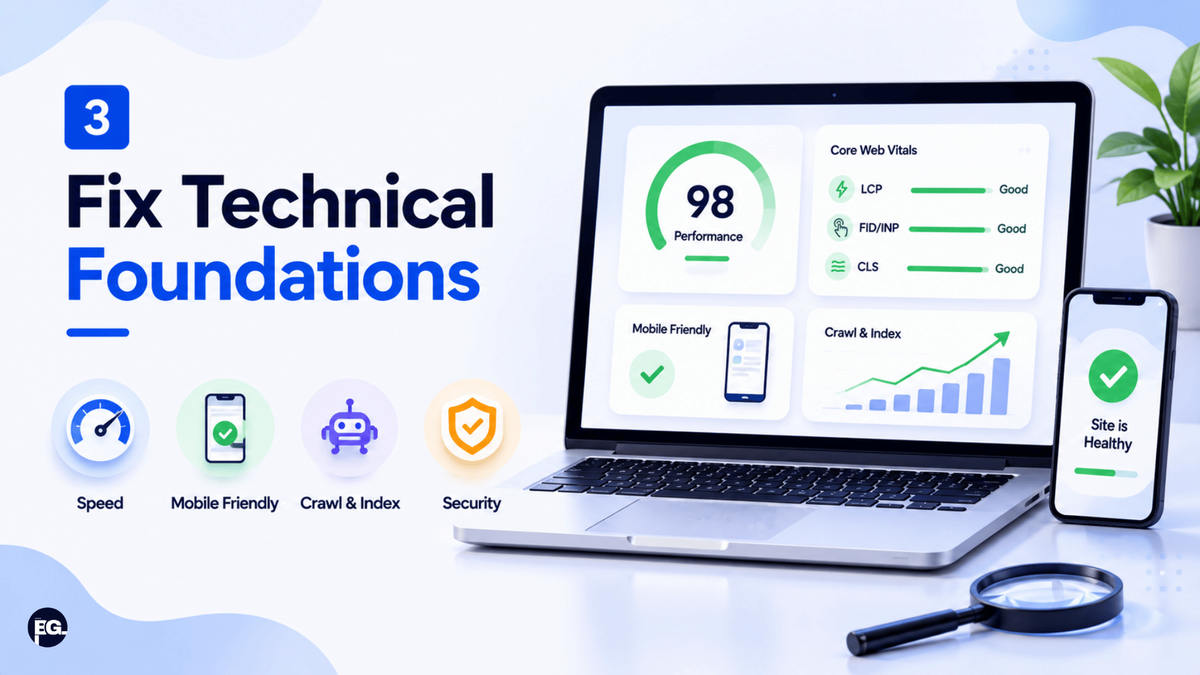
Whenever someone asks me how to rank higher on Google and they already have dozens of decent pages, I usually check something else first: technical health. A site can have great content and still be stuck if Google can’t crawl, index, or load it properly.
First Page Sage’s 2026 SEO study also confirms that mobile-first, fast-loading pages with clean URL structures consistently outperform slow or poorly-indexed pages, regardless of content quality. Click‑through rate research also reminds us why it matters: top positions can get close to 40% of clicks in traditional results, but with Google AI Overviews now appearing in over 55% of searches (as of 2026). Ahrefs data shows AI Overviews reduce position-one CTR by up to 58%, which is exactly why showing up as a cited source inside those AI summaries matters just as much as the organic ranking itself.
These steps don’t feel as exciting as “secret hacks,” but when they’re wrong, they set a hard ceiling on how high you can rank.
On‑page SEO used to be described as “put the keyword in the title, H1, and a few times in the text.” In 2026, that’s the bare minimum. To really rank higher on Google, on‑page work has to improve the experience as well as the signals.
WordStream’s updated ranking guide, Moz’s 25‑step checklist, and AIOSEO’s “rank higher on Google” article all still recommend the core basics: relevant titles, headings, meta descriptions, and internal links. Backlinko’s large click-through rate study adds more nuance: position 1 gets around 27.6% of all clicks on average (Backlinko, 4M result study), while position 10 gets under 2.5% and writing clear, focused titles with strong meta descriptions can improve your CTR meaningfully without changing your ranking position.
When you do this well, you don’t just rank higher on Google, you also get more clicks and keep more of the traffic you’ve already earned.
The last big piece in any “how to rank higher on Google” conversation is trust. Google’s documentation and many independent guides now talk about EEAT (experience, expertise, authoritativeness, and trustworthiness) as the lens through which content is evaluated.
Recent studies and reports show that high‑ranking pages are more likely to have strong backlink profiles, clear authorship, and consistent brand signals across the web. At the same time, a 2026 Ahrefs study found that sites cited inside Google AI Overviews earned significantly more brand visibility even when organic click-through rates declined overall, which shows how much more Google now rewards credible, referenced sources over generic content that just happens to rank.
You don’t need thousands of links or reviews to rank higher on Google, but you do need enough clear trust signals that Google can feel confident recommending you.
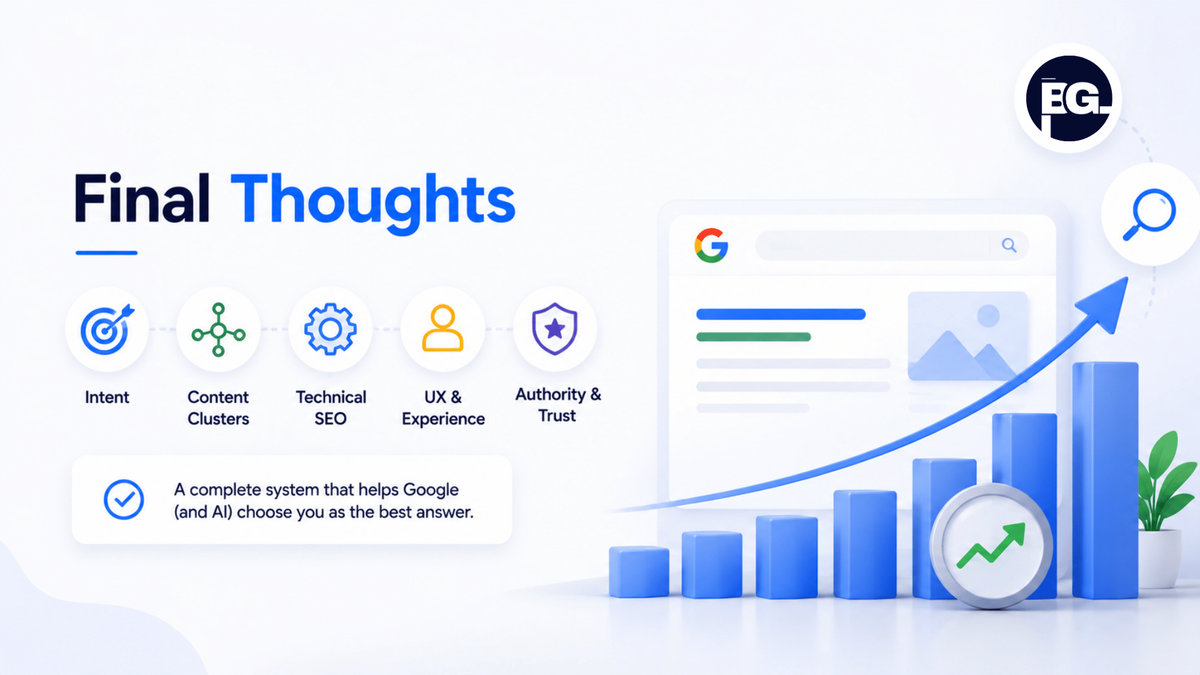
Across the latest 2026 guides, one theme repeats: there is no single hack that will magically make you rank higher on Google. The businesses that win treat rankings as the result of a system, clear intent, structured content, clean tech, and real trust, all working together.
If your pages answer real questions better than competitors, your site is technically solid, and your brand looks like a credible source, you give yourself a real shot at those high‑value positions, even in an AI‑heavy search landscape where click‑through rates are under pressure.
If you want help building a system that actually helps you rank higher on Google, BrainGig can help you plan your content, fix technical issues, and create GEO‑friendly pages that work for both search and AI. Contact us now to turn your website into a consistent source of traffic, leads, and real growth.
Q: What is the first step if you want to rank higher on Google in 2026?
A: The first step is to understand and match search intent, informational, commercial, transactional, or local, so each page directly answers what the searcher is really trying to do instead of just repeating the keyword.
Q: Why are topic clusters important for ranking higher on Google?
A: Topic clusters help you rank higher on Google by showing topical authority: one strong pillar page supported by several related articles and internal links sends a clearer signal to Google than isolated, thin posts.
Q: How do technical basics affect your ability to rank higher on Google?
A: Technical factors like core web vitals, mobile‑friendliness, crawlability, and clean structure are now baseline requirements. If these are poor, even great content struggles to rank higher on Google or stay visible after updates.
Q: What on‑page elements still matter most in 2026?
A: Clear titles, meta descriptions, headings, internal links, summaries, and FAQ sections all remain key, especially when they make pages easier to scan and help improve click‑through rates from search results.
Q: How do links and trust signals help you rank higher on Google?
A: Relevant backlinks, consistent brand signals, reviews, and visible experience (case studies, author info) all contribute to EEAT, which modern guides and Google’s own guidance highlight as essential for earning and keeping strong rankings.
Most guides suggest that noticeable improvements usually take 3–6 months of consistent work, with more competitive queries often needing 6–12 months of content, technical fixes, and authority building before you see stable top‑page rankings.
Yes. While content and technical quality are critical, data and expert checklists consistently show that pages with relevant, high‑quality backlinks outperform similar pages without them, especially in competitive niches.
AI‑focused and ranking guides recommend reviewing and refreshing key pages at least every 6–12 months, updating stats, screenshots, and examples so they stay accurate and attractive to both users and search systems.
Most 2026 checklists agree that sporadic page tweaks rarely move the needle; you get better results by building a system with clear topics, clusters, technical health, and authority signals across the whole site.
Yes. AI‑focused guides explain that many sources cited in AI answers are already well‑optimized pages that rank in classic search, so you still need strong SEO to be discovered, cited, and clicked, both in traditional results and in AI experiences.