
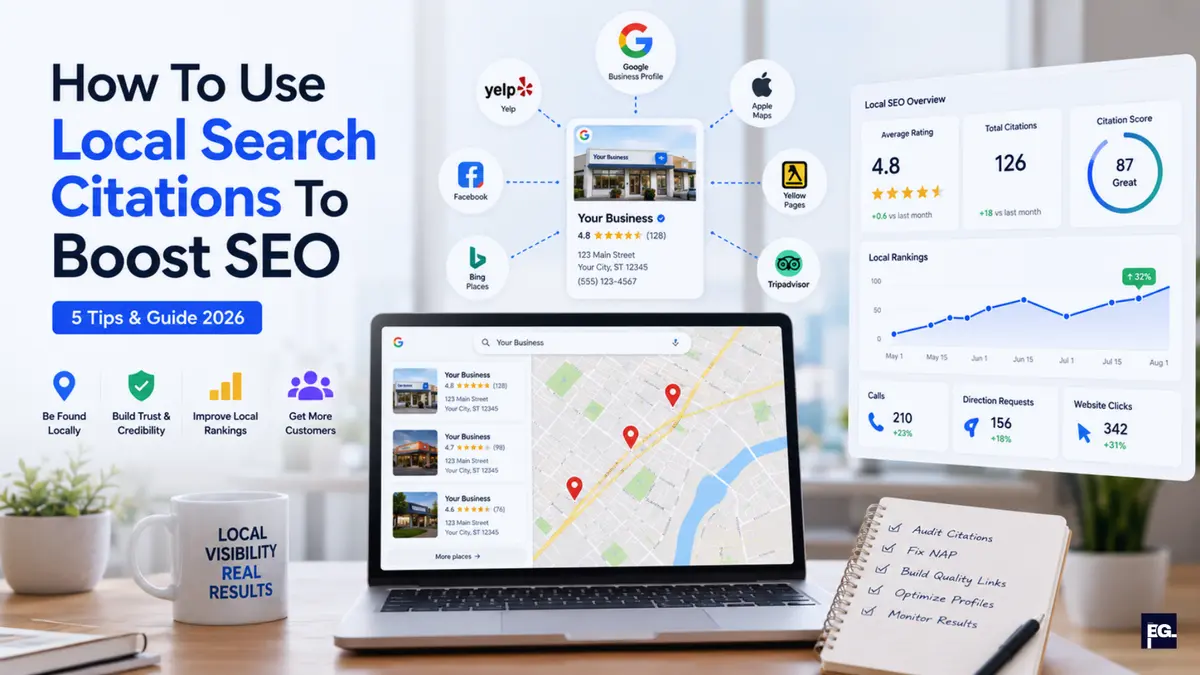
I’ve been working on local SEO campaigns for years now, and one pattern keeps showing up: most businesses have local search citations scattered all over the internet, but very few have them under control.
I’ve seen Google Business Profiles say one thing, Facebook another, old directory listings show a previous address, and random sites list the wrong phone number. In that situation, it’s not surprising when local rankings are weak and customers say, “I tried to call, but the number didn’t work.”
In this guide, I’ll show you how I think about seo citations for clients: what they are, why they still matter in 2026, and a simple 5‑step process to clean them up, build better ones, and use them to support your local SEO instead of quietly hurting it.
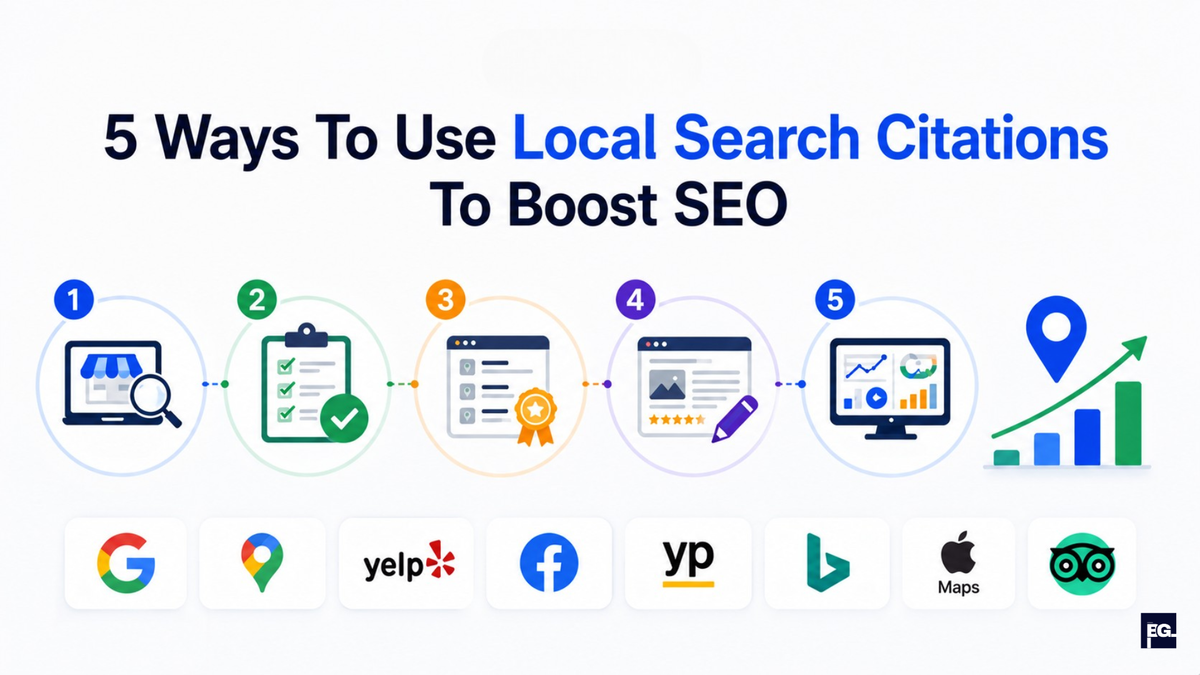
If you want the short version, here’s the 5‑step approach I use in 2026:
If you’d rather have this handled properly from the start, Braingig offers local SEO services that include full citation audits, cleanup, and ongoing management. We’ve helped businesses in competitive markets clean up years of inconsistent NAP data and improve their map pack visibility, get in touch to see how we can do the same for you.
| Step | What it means | Simple action to take |
|---|---|---|
| 1. Learn what citations are | Mentions of your Name, Address, Phone (NAP) on third‑party sites that help Google verify your business. | List your existing local search citations (Google, Yelp, Facebook, key directories) so you know what’s already out there. |
| 2. Audit and fix existing listings | Wrong or inconsistent NAP data damages trust for users and search engines. | Standardize one NAP format and update all major listings to match it exactly. |
| 3. Build high‑quality citations | Strong, relevant directories and local sites beat hundreds of weak ones. | Claim and complete profiles on Google, core directories, and a shortlist of niche and local sites. |
| 4. Optimize every citation | Complete, consistent data (NAP + extras) sends stronger authority signals. | Add full business descriptions, categories, photos, and links wherever each platform allows. |
| 5. Maintain and measure | Citations are ongoing; accuracy and outcomes matter more than one‑time setup. | Re‑check key listings quarterly, and track local rankings, calls, and direction requests. |
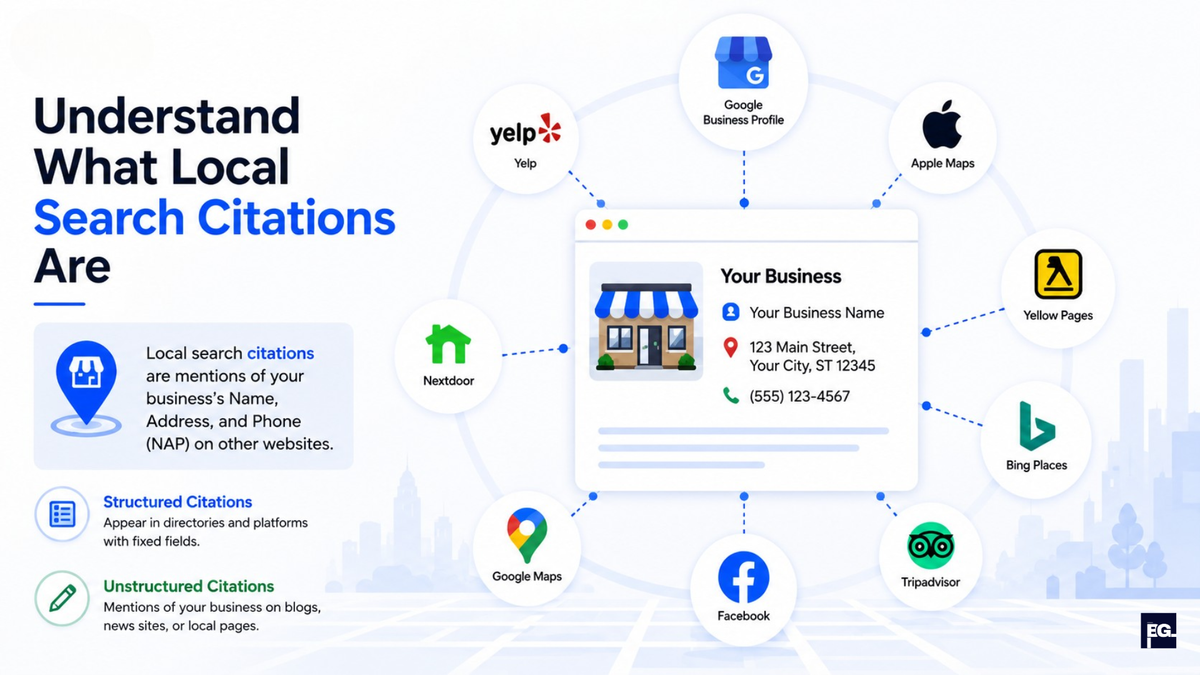
When I talk to clients, a lot of confusion starts right here: “Are local search citations just backlinks?” Not exactly.
Local search citations are online mentions of your business’s name, address, and phone number (NAP) on third-party sites such as business directories, review platforms, and local listings. They don’t even need to contain a clickable link; the NAP itself is the signal. According to industry research, citations make up approximately 8% of local SEO ranking factors, making them a meaningful part of any serious local search strategy.’
Search Engine Journal notes that citations have long been accepted as a key local ranking factor, especially for the map pack and localized results, because they help Google confirm that your NAP is accurate and your business is real.
In simple terms: Local search citations are like “digital references” that help Google double‑check who you are, where you are, and whether you’re a legitimate, established business.
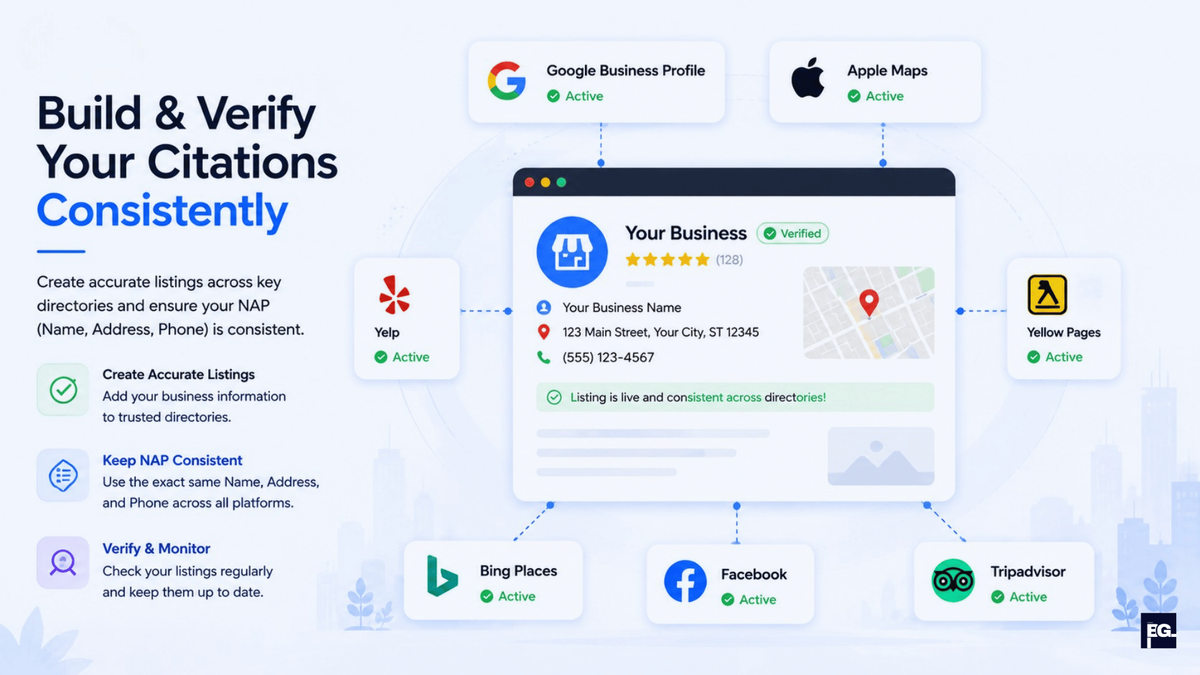
When I start a local SEO project, I rarely build new local seo citations first. I start by cleaning up the ones that already exist.
BrightLocal’s “Citation Survey” found that:
Bird Marketing and Digitalcue make a similar point: inconsistent NAP information (for example, different phone numbers across platforms) can confuse search engines and users, leading to lower visibility and lost trust.
You don’t need to fix every single small listing on day one. Focus on your highest‑authority and most visible citations first like Google, major directories, and strong niche/local sites and make sure they match perfectly.
Example: For a multi‑location service business I worked with, we found three different phone numbers across major directories. After standardizing everything to one NAP and closing duplicate listings, we saw more consistent map pack visibility and fewer “wrong number” complaints from customers.
Once your existing local seo citations are clean and consistent, you can start building new ones where they actually matter.
Ontoplist’s citation guide and Neil Patel’s article both emphasize that quality and relevance matter more than raw volume. A handful of high‑authority seo citations on well‑known platforms can be more useful than hundreds of weak listings. Hennessey Digital also points out that good local listings contribute to visibility, traffic, and authority in local search.
The goal is not to appear everywhere on the internet. The goal is to have your NAP appear accurately and consistently in places that Google and your customers actually trust.
Example: For a local clinic, we prioritized: Google Business Profile, Bing Places, Apple Maps, Yelp, major healthcare directories, and the city’s business directory. We ignored low‑quality “free directory list” sites. That limited, focused set of local search citations was enough to support strong map pack visibility.
A lot of businesses stop at “name, address, phone” and call it a day. But most citation platforms now let you add much more: website, categories, descriptions, photos, hours, and sometimes even posts.
Semrush’s guidance on NAP consistency and Bird Marketing’s NAP article both highlight that complete, matching information across platforms builds trust with search engines and users. Search Engine Journal adds that citations are evaluated by consistency, quality, quantity, and completeness.
Example: When we fully optimized a client’s major listings like updated descriptions, added categories, added photos, and fixed hours, they saw an increase in profile views and website clicks from those platforms even before we built any new citations. The seo citations they already had simply started working harder.
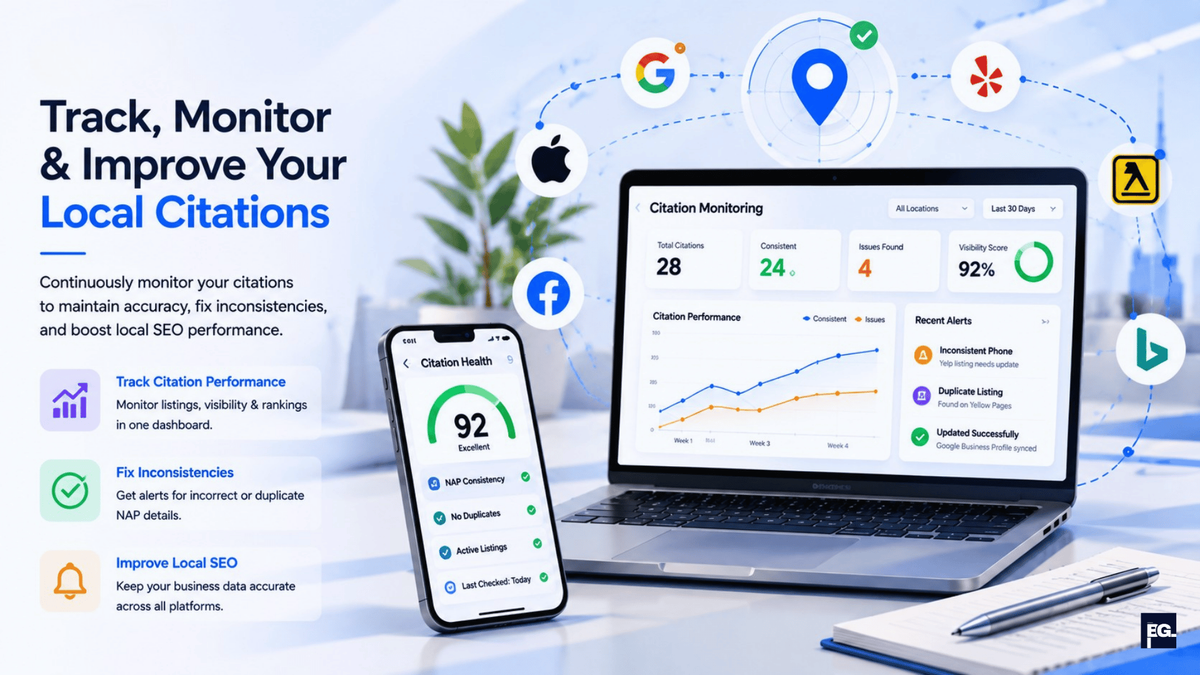
The last piece is the one most businesses skip: maintenance. Citations are not “set and forget,” especially if you change location, phone number, or branding.
BrightLocal’s citation survey shows that while citations are still considered important, experts see them as a foundational tactic that must be kept accurate over time rather than constantly expanded. Ontoplist and other 2026 citation guides also stress that cleaning up bad data can move rankings faster than just adding new listings. DigitalApplied’s local SEO statistics remind us that local signals, including accurate listings, continue to play a key role in overall local visibility.
Example: For one local client, we ran a citation audit, fixed inconsistent NAP across about 20 key sites, and built a small batch of high‑quality listings. Over the next couple of months, we saw better map pack visibility and more calls from local search without changing ad spend. The citations themselves didn’t “sell” anything, but they helped Google trust the business more and helped customers always find the right details.
From what I’ve seen across different local projects, local search citations work best when you think of them as a trust layer, not a growth hack.
You don’t need thousands of local seo citations scattered across low‑quality sites. You need a clean, consistent, well‑maintained set of seo citations on platforms your customers and search engines actually care about. When your NAP is correct everywhere, your profiles are complete, and your listings match what’s on your website, you make it easy for Google to say, “Yes, this business is real and relevant for local searches.”
If you want help auditing, cleaning, and building a focused citation strategy as part of your broader local SEO plan, contact BrainGig today! Our team can help you combine citations, content, and technical SEO into a simple system that strengthens your local visibility instead of leaving it to chance.
Q: What is the role of local search citations in local SEO?
A: local search citations act as digital references that help search engines verify your business’s identity and location. Accurate, consistent citations across trusted platforms support map pack visibility and local rankings.
Q: Why should you audit existing local SEO citations before building new ones?
A: Because wrong or inconsistent NAP data can hurt trust and rankings. BrightLocal’s research shows both experts and consumers see incorrect directory info as a serious problem, so fixing current seo citations is often the fastest win.
Q: What makes a “good” local seo citation?
A: A good citation is on a reputable, relevant platform, uses your exact NAP, includes complete business details, and matches what’s on your website and Google Business Profile.
Q: How do you keep seo citations working over time?
A: Treat them as an ongoing asset: standardize your NAP, update major listings when anything changes, periodically review accuracy, and track local rankings and lead metrics to see the impact of your citation work.
Local search citations are references to your business’s name, address, and phone number (NAP) on third‑party sites like directories, review platforms, and local listings. They help search engines verify your business information and can influence local rankings, especially when they are accurate and consistent.
Yes. BrightLocal’s expert survey shows that 90% of local SEO specialists believe accurate citations are important to local rankings, and major guides from Neil Patel, Search Engine Journal, and others still include citations as core local SEO fundamentals.
There is no perfect number. Most experts recommend focusing on core platforms (like Google, Bing, Yelp), major directories, and a targeted list of niche and local sites rather than chasing hundreds of low‑quality listings. Quality, relevance, and consistency are more important than volume.
Not necessarily. Even unlinked mentions of your NAP on reputable sites can help search engines confirm your business details. That said, when citations include links, they can also drive referral traffic and contribute to your overall authority.
A good rhythm is to review key listings quarterly, or any time your NAP changes (for example, a move, rebrand, or new phone number). Regular checks help you catch errors before they start hurting trust and local rankings.