
Over the last few years, I’ve worked with home industry businesses from remodeling companies and interior designers to cleaning services and HVAC brands, and I keep seeing the same pattern: they have websites, blogs, and social pages, but most of their seo-friendly content is invisible in search and not built to convert real homeowners.
At the same time, research shows that 65% of homeowners use search engines as their first stop when looking for a contractor, and 91% check online reviews before ever making a call (Arcsite / Clear Seas Research, 2024). If your content isn’t both useful and SEO-friendly, you’re basically letting competitors answer those questions instead of you.
In this guide, I’ll walk you through how I think about seo‑friendly content for the home industry in 2026: how to understand your ideal homeowner, structure content for both Google and AI, use real examples and visuals, and turn all that effort into calls and quote requests, not just traffic.
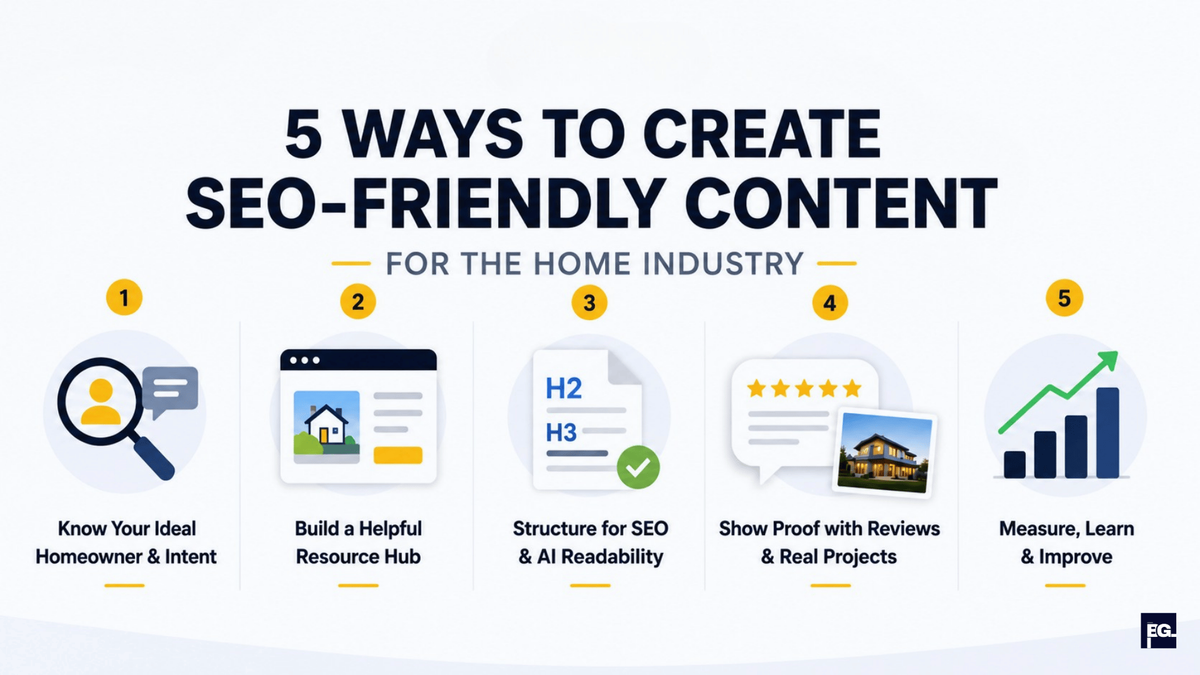
If you want the short version, here’s the 5‑step approach I use with home industry clients:
BrainGig note: A strong home industry content strategy combines seo‑friendly content, local visibility, and conversion‑focused pages so you don’t just get clicks, you get homeowners who are ready to talk.
| Step | What it means in real life | Simple action to take |
|---|---|---|
| 1. Know your ideal homeowner | Content is written for a specific type of home, budget, and project | Write 1–2 ideal client profiles and list their top 10 questions |
| 2. Make your site a home resource | Mix service pages with guides, FAQs, and checklists | Create at least one detailed guide per key service (cost, process, timelines, risks) |
| 3. Structure for SEO and AI | Clear headings, FAQs, internal links, and descriptive titles/meta | Use H2/H3s, FAQ sections, and internal links on every major page |
| 4. Show real proof | Reviews, before‑after photos, and project stories across your content | Add reviews, photos, and mini case studies to your main pages and blogs |
| 5. Measure and refine | Track which pages bring inquiries and booked jobs | Use call tracking and tagged forms, review performance monthly, and improve or expand winning topics |
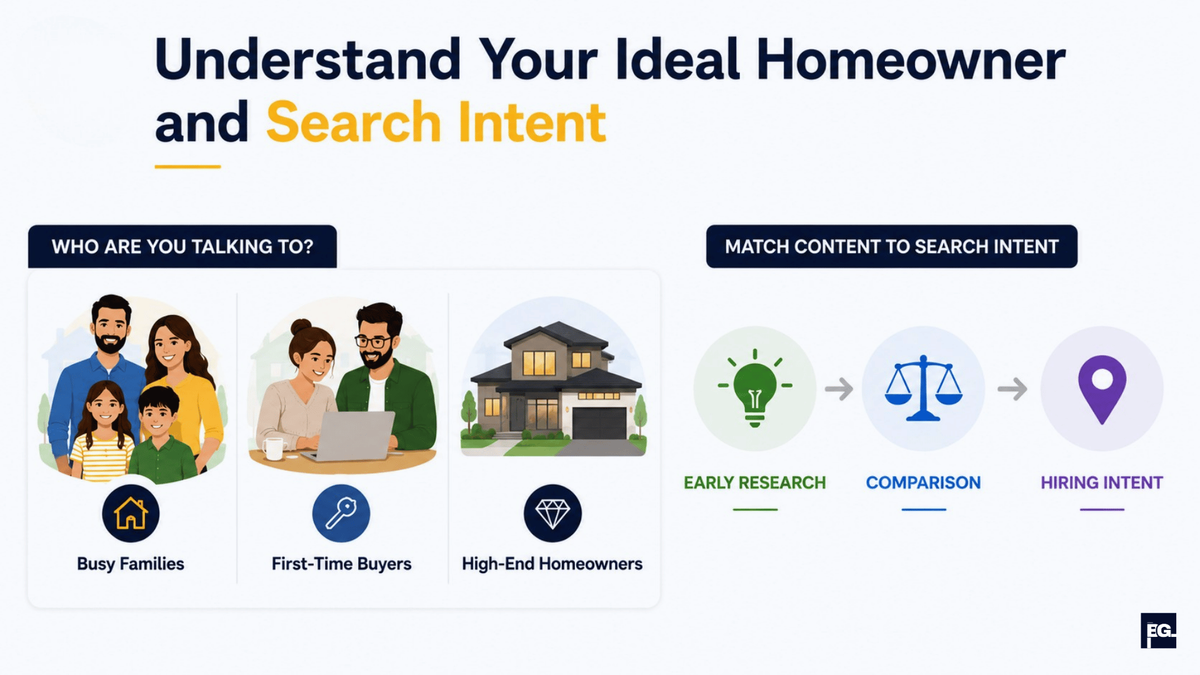
When I review content for home industry brands, the first issue I usually see is this: the blog is trying to talk to “everyone” at once. One post is for landlords, another for luxury homeowners, and another for quick DIY fixes, all with the same tone and calls‑to‑action.
Home improvement marketing research shows that content performs best when it matches a clear audience and project type, for example “busy families in older homes,” “first‑time buyers doing their first remodel,” or “landlords refreshing rental units.” At the same time, SEO guides for home services stress that matching search intent whether someone wants inspiration, cost info, or a contractor, is essential if you want to rank and convert.
For the home industry, seo‑friendly content should cover all three stages but make it clear who the content is for and what you want them to do next. That way, a homeowner who finds you via a blog post can naturally move to a service page or quote form.
Once I understand the ideal homeowner and search intent, the next step is to look at the website itself. Many home industry sites still act like online brochures: a short services list, a gallery, and a contact page. Helpful, but not enough for modern SEO.
Content marketing studies from the Content Marketing Institute and Forbes show that content marketing can generate more than 3x as many leads as outbound marketing while costing significantly less per lead, especially when the content is educational and aligned with search queries. In the home improvement world, specialized agencies report similar patterns: consistent blogs and guides on cost, timelines, and process help attract homeowners and build authority.
Each of these topics lets you naturally use “seo‑friendly content” and “home industry” language in a way that feels human, not stuffed, while giving homeowners real value.
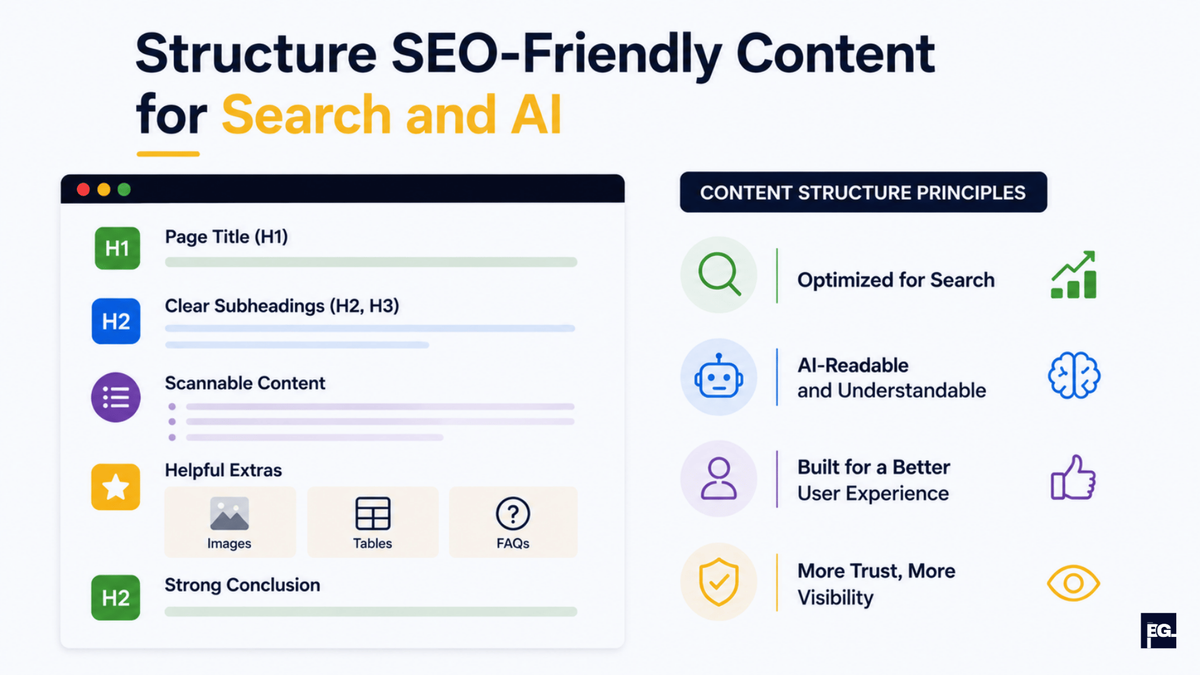
In 2026, writing a good article is not enough. The way you structure your content matters as much as the words themselves. Updated SEO strategy guides highlight that AI‑driven search and features like snippets and “things to know” tend to pull from pages that are well structured, clear, and easy to parse.
Most strong home service SEO guides like ServiceTitan, Search Engine Land, Housecall Pro recommend the same basics: use descriptive headings, short paragraphs, logical sections, internal links, and FAQ blocks that directly answer questions a homeowner might type or speak into their phone.
For example, a blog titled “5 Maintenance Tips for Hardwood Floors in Busy Homes” with headings like “How Often Should You Clean Hardwood Floors?” and “What Products Should You Avoid?” is much easier for Google and AI systems to understand than vague “Floor Care Tips.”
In the home industry, visuals and social proof are not optional, they are core parts of seo‑friendly content. Remodeling and home service marketing studies show that homeowners respond strongly to real project photos, before‑after galleries, and detailed stories about how a problem was solved.
At the same time, BrightLocal’s Local Consumer Review Survey shows that reviews and ratings heavily influence click‑through rates and conversions. For many home service businesses, optimized content that includes reviews and testimonials generates more inquiries than content without them, even when both rank similarly.
For example, in an article about “Designing a Cozy Living Room in a Small Home,” you might show photos from a recent project, share a short quote from the client, and link to a full case study. That turns a simple article into a trust‑building asset.
The last piece is the one many home industry brands skip: measurement. They publish blogs and update pages, but they don’t track which specific content actually leads to calls, bookings, or consultations.
Home service SEO guides from platforms like ServiceTitan and Podium suggest tracking metrics such as organic traffic to key pages, click‑through rates from search, and the percentage of visitors who call or submit a form after reading a piece of content. Some home improvement marketing case studies also show that when companies align content topics with homeowner intent and measure results, they are able to reduce cost per lead and increase conversion rates over time.
When you see that a specific piece of seo‑friendly content, for example, “Roof Inspection Checklist Before the Rainy Season” is generating more inquiries than others, you can expand that topic into more guides, videos, or service page improvements.
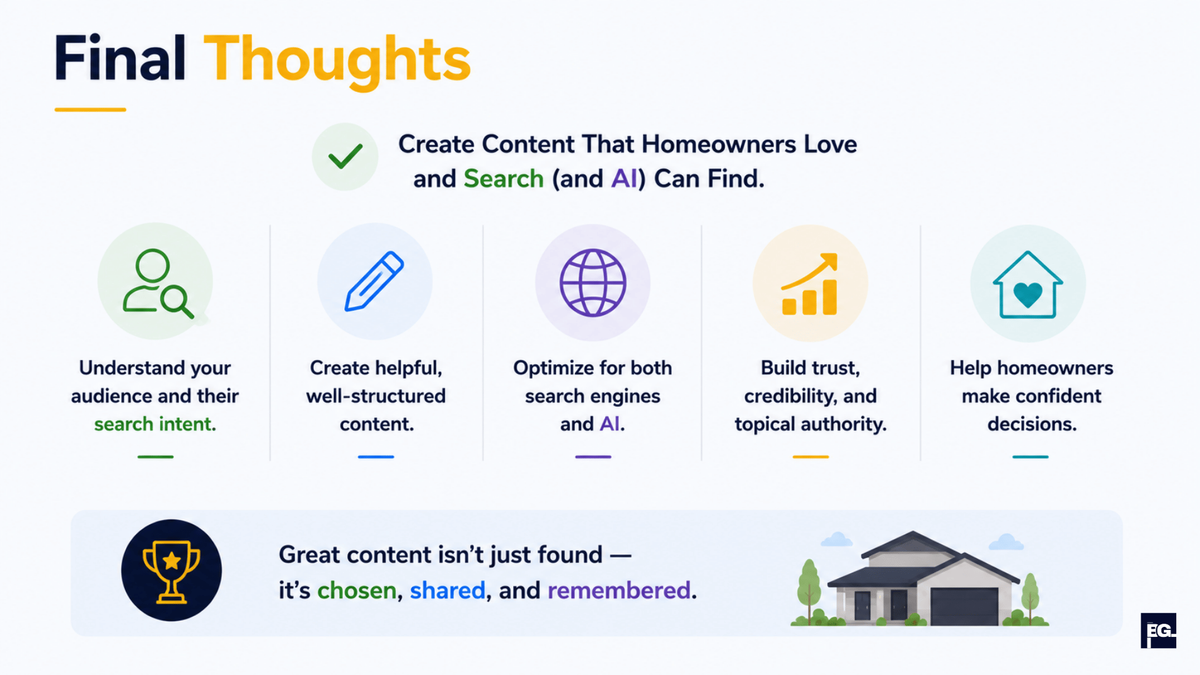
From what I’ve seen across home industry brands, seo‑friendly content works best when you treat it as a long‑term trust engine, not a quick hack. The goal is to show up whenever a homeowner in your area searches for ideas, costs, or help and then make it easy for them to see why you’re the right team to call.
If your content speaks clearly to the right homeowners, answers their questions, shows real proof, and is structured so both search engines and AI can understand it, you give yourself a big advantage over competitors who still rely on thin service pages or generic posts.
BrainGig helps home industry brands create seo-friendly content that attracts the right audience and turns traffic into leads. Contact us now to get started.
Q: What makes content “seo‑friendly” for the home industry in 2026?
A: Seo‑friendly content for the home industry is content that matches homeowner intent, uses clear structure and relevant phrases, includes proof like photos and reviews, and is easy for both search engines and AI to understand and recommend.
Q: Why should home industry brands focus on educational content?
A: Content marketing studies show that educational content can generate around 3x more leads than traditional outbound marketing at a lower cost per lead, which is especially valuable in competitive home improvement markets.
Q: How does structure impact seo‑friendly content?
A: Well‑structured content with descriptive headings, internal links, and FAQs is more likely to earn higher rankings, featured snippets, and mentions in AI‑generated answers compared with unstructured text blocks.
Q: Why are visuals and reviews so important in the home industry?
A: Homeowners rely heavily on real photos, before‑after examples, and reviews to judge quality and trustworthiness, so content that includes these elements tends to convert better than content that doesn’t.
Seo‑friendly content for the home industry is content that answers real homeowner questions, uses natural keywords and phrases related to home services or home improvement, and is structured in a way that helps your pages rank and convert rather than just “stuffing” keywords into generic posts.
There is no perfect number, but many successful home improvement brands aim for at least 2–4 high‑quality pieces per month, mixing service updates, guides, FAQs, and project stories. Consistency and relevance matter more than raw volume.
No. In fact, some of the best seo‑friendly content for the home industry is educational first and sales‑driven second, with a clear but gentle call‑to‑action at the end. Overly pushy content tends to perform worse in both search and user engagement.
Most home industry businesses get better results by focusing on local and service‑specific keywords (for example, “kitchen remodeler in [city]”) rather than broad national terms, unless they sell products or services nationwide.
You can absolutely start on your own by answering real customer questions, sharing project stories, and following basic SEO best practices. Many home industry brands later bring in specialized agencies like BrainGig when they want to scale their content output, refine their strategy, and integrate GEO‑friendly structure across their entire site.