Over the last few years, I’ve helped businesses that were stuck on page 2 or buried under competitors even though they had “done SEO.” Most of them wanted a simple answer to one question: how to rank higher on Google without guessing every month. In this checklist, I’ll walk you through how I think about ranking higher on Google in 2026: from intent and content clusters to technical fixes, authority, and AI‑friendly structure. Whether you’re a small business owner, a marketer managing a company website, or a blogger looking to grow organic traffic, these steps apply — I’ll keep it practical, show data where it matters, and focus on steps you can actually implement today.
Over the last few years, I’ve worked with home industry businesses from remodeling companies and interior designers to cleaning services and HVAC brands, and I keep seeing the same pattern: they have websites, blogs, and social pages, but most of their seo-friendly content is invisible in search and not built to convert real homeowners. At the same time, research shows that 65% of homeowners use search engines as their first stop when looking for a contractor, and 91% check online reviews before ever making a call (Arcsite / Clear Seas Research, 2024). If your content isn’t both useful and SEO‑friendly, you’re basically letting competitors answer those questions instead of you. In this guide, I’ll walk you through how I think about seo‑friendly content for the home industry in 2026: how to understand your ideal homeowner, structure content for both Google and AI, use real examples and visuals, and turn all that effort into calls and quote requests, not just traffic.
Over the last few years, I’ve audited a lot of websites that were “doing SEO” but still kept losing rankings, clicks, and leads. And in most cases, the problem was not one huge technical disaster. It was a pattern of SEO mistakes and a few very common SEO mistakes to avoid that kept piling up quietly until performance dropped. In this guide, I’ll walk you through the top 5 SEO mistakes to avoid in 2026, whether you’re a small business owner, a marketer managing a company’s site, or a blogger trying to grow. These are the most common SEO mistakes I see across all of them, and fixing even one or two can make a real difference. I’ll keep it simple, practical, and backed by examples and data so you can actually use it.
Brand design gives your business a clear visual identity that customers recognize instantly, while brand guidelines lock in that look across every ad, website, and email. This guide walks you through both with easy steps, real examples, and tips to grab a brand guidelines template, all to help your site rank higher and build trust.
When someone clicks on your site, they decide in a few seconds whether to stay or leave and your website loading speed is often what makes that decision for them. In 2026, users expect pages to appear almost instantly on any device, and Google rewards sites that load fast and feel smooth with better visibility in search. In this guide, you’ll learn exactly why speed matters and how to increase website speed step by step, using simple, practical fixes you can apply even if you are not a developer.
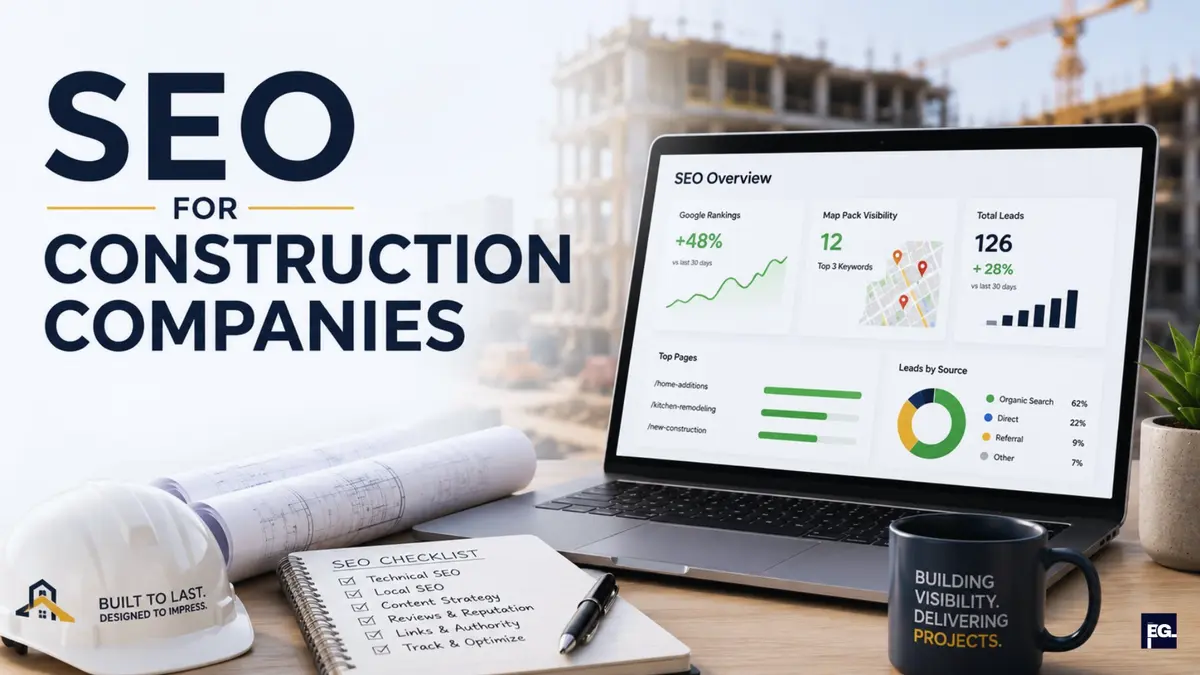
In the last few years, I’ve worked with construction companies, home improvement brands, and local contractors who all had the same complaint: “We do great work, but our website barely shows up on Google and the phone is quiet.” In this guide, I’ll walk you through how I think about SEO for construction companies in 2026: not just “rank higher,” but build a trusted online presence that shows up in Google, Google Maps, AI answers, and review sites and actually turns those views into project inquiries. I’ll keep it practical, use real numbers from construction and local SEO studies, and focus on things a small or mid-sized construction business can realistically implement. If you are a general contractor, a specialty trade contractor, or a remodeling company trying to win more local jobs, this guide is built specifically for you.
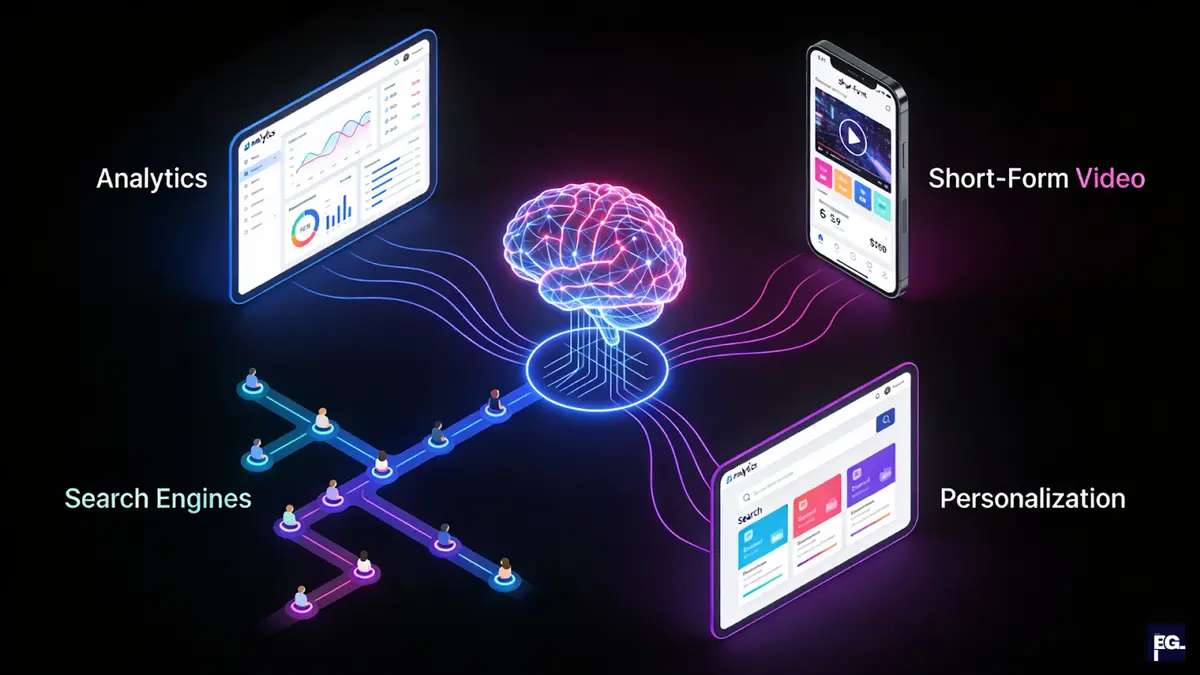
Digital marketing trends in 2026 changing everything with AI customizing experiences fast, GEO beats old SEO, videos sell right away, communities work better than ads, your own data wins without cookies, and new metrics show real success. Grow big with these marketing trends in an AI-driven future.
Search engine optimization (SEO) is how your business shows up when customers search on Google and other platforms. For small businesses, good SEO means more organic traffic, more enquiries, and more sales without relying only on paid ads. This beginners guide for SEO focuses on simple, high‑impact steps to understand what your customers search for, fix a few technical basics on your website, optimise key pages, claim and improve your Google Business Profile, create genuinely helpful content, and track results with free tools. If you follow the steps in this guide, you will have a solid, Google‑friendly SEO for small businesses strategy that can grow your visibility for years, not just weeks.
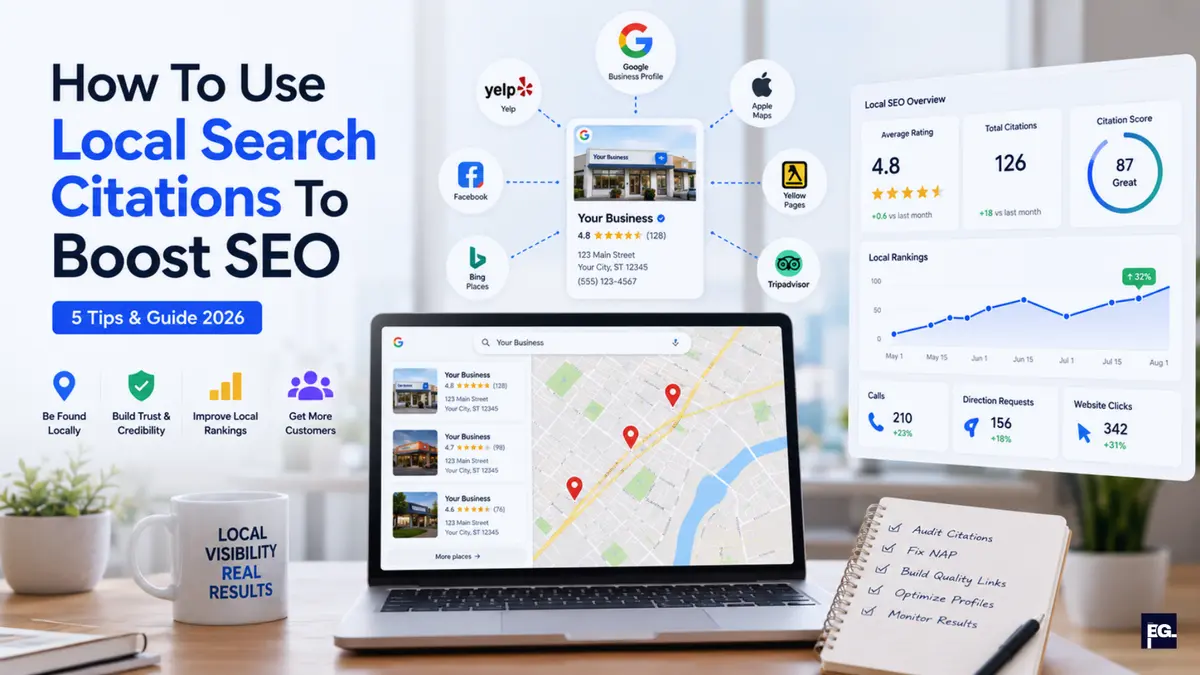
I’ve been working on local SEO campaigns for years now, and one pattern keeps showing up: most businesses have local search citations scattered all over the internet, but very few have them under control. I’ve seen Google Business Profiles say one thing, Facebook another, old directory listings show a previous address, and random sites list the wrong phone number. In that situation, it’s not surprising when local rankings are weak and customers say, “I tried to call, but the number didn’t work.” In this guide, I’ll show you how I think about seo citations for clients: what they are, why they still matter in 2026, and a simple 5‑step process to clean them up, build better ones, and use them to support your local SEO instead of quietly hurting it.